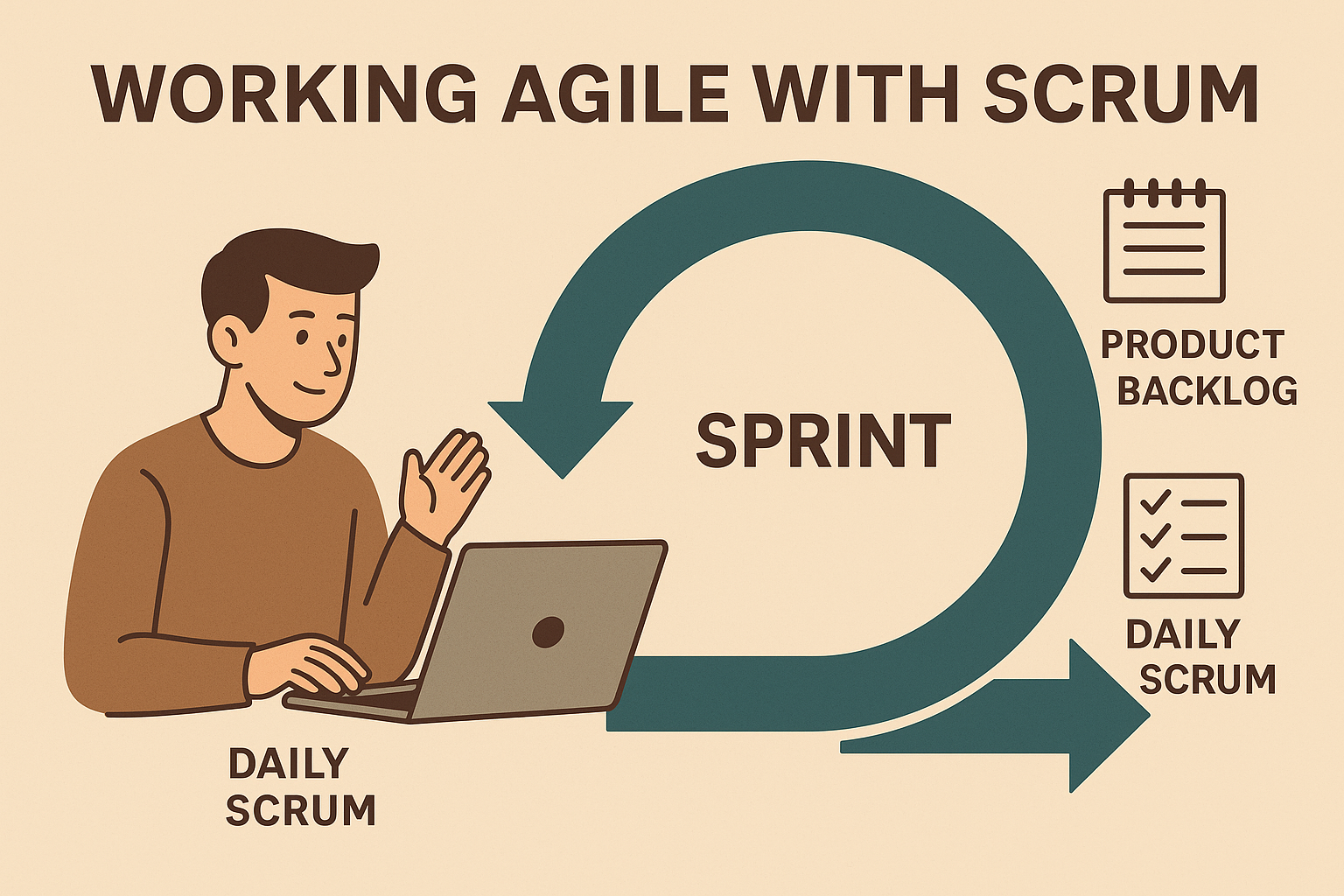
Working in Agile with Scrum
Agile methodology, particularly Scrum, is widely used in modern software development. It emphasizes collaboration, adaptability, and continuous value delivery.
In this article, we’ll explore the core principles of working with Agile using Scrum, and how to apply them effectively.
What is Scrum?
Scrum is an Agile framework that allows teams to work in an iterative and incremental way. It relies on defined roles, recurring events, and artifacts to ensure transparency and continuous improvement.
Key Scrum Roles
- Product Owner: responsible for the product vision and backlog prioritization
- Scrum Master: facilitator ensuring the team follows Scrum principles
- Development Team: the members who design, build, and deliver functionality
Scrum Ceremonies
- Sprint Planning: defines sprint goals and tasks
- Daily Scrum: short daily sync meeting
- Sprint Review: showcases completed work
- Sprint Retrospective: reflects on the process and identifies improvements
Backlog and User Stories
The backlog is a prioritized list of features. Each item (user story) typically follows the format: As a [user], I want [feature] so that [benefit].
Benefits of Scrum
- Improved team collaboration
- Continuous and incremental delivery
- Ability to adapt to change
- Clear visibility into project progress
Conclusion
Scrum promotes a collaborative work environment focused on continuous improvement and customer satisfaction. When applied properly, it makes projects more agile and efficient.